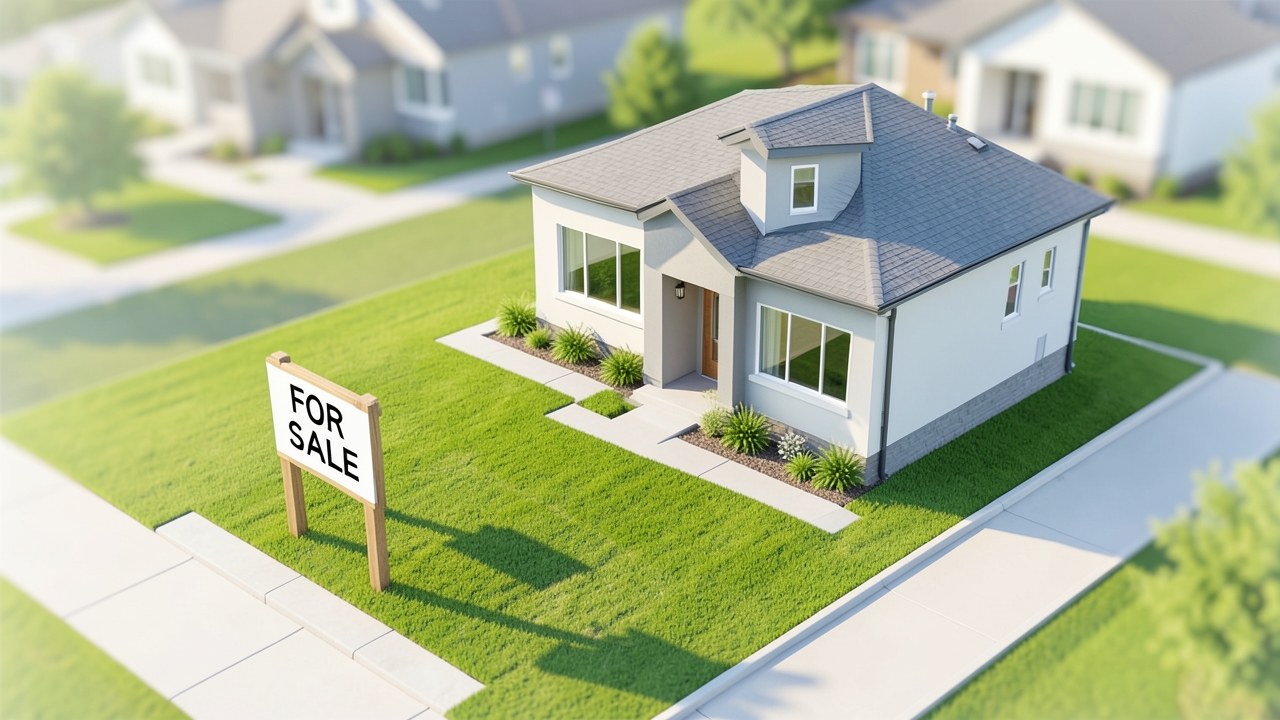
What Is a Home Loan?
A home loan, commonly called a mortgage, is a loan used to finance the purchase of a home. The home itself serves as collateral for the loan, and you repay the borrowed amount plus interest over a set period, typically 15 or 30 years.
- Mortgages are offered by private lenders and are not insured or guaranteed by the federal government unless they are government-backed loans.
- Mortgage insurance may be required if you put down less than 20% on a conventional loan, protecting the lender if you default.
- The annual percentage rate (APR) includes not only the interest rate but also costs like broker fees, points, and closing costs, making it a more comprehensive measure of loan cost.
Sources: Charles Schwab, Fannie Mae
Mortgage Loan Types at a Glance
Choosing the right home loan depends on your financial situation, down payment, and credit profile. The table below summarizes common loan types, their typical down payment requirements, credit expectations, and whether they are backed by the government.
- Conventional loans are not government-backed and usually require a down payment of 5% to 20%.
- FHA loans allow a 3.5% down payment and are popular for first-time buyers.
- VA loans are available to eligible veterans and service members and require no down payment.
- USDA loans support home purchases in eligible rural areas with zero down payment.
- Jumbo loans exceed conforming loan limits and require stronger credit and a larger down payment.
| Loan Type | Down Payment | Credit Requirement | Fixed or Adjustable | Insurance Required | Government Backing |
|---|---|---|---|---|---|
| Conventional | 5-20% | High | Fixed or Adjustable | If < 20% down | No |
| FHA | 3.5% | Low | Fixed | Yes | Yes |
| VA | 0% | Moderate | Fixed or Adjustable | No | Yes |
| USDA | 0% | Low | Fixed | Yes | Yes |
| Jumbo | 10-20%+ | Very High | Fixed or Adjustable | Usually | No |
Sources: Capital Bank, Charles Schwab
Fixed-Rate vs. Adjustable-Rate Mortgages
Mortgages come in two main interest rate structures: fixed-rate and adjustable-rate. A fixed-rate mortgage keeps the same interest rate for the entire loan term, typically 15 or 30 years, giving predictable monthly payments. An adjustable-rate mortgage (ARM) starts with a fixed-rate period, after which the rate adjusts periodically based on market conditions.
- Common ARM structures include 5/6, 7/6, and 10/6 ARMs, where the first number indicates the fixed-rate period in years and the second indicates how often the rate adjusts (e.g., every 6 months).
- Fixed-rate loans shield you from interest rate increases during the term.
- ARMs may offer a lower initial rate, but payments can rise when the rate adjusts.
Sources: Charles Schwab
Understanding Mortgage Rates
Mortgage rates are not one-size-fits-all; they vary by lender, loan type, and your financial profile. Current averages from a large marketplace showed a 30-year fixed mortgage around 7.10% APR and a 15-year fixed at 6.64% APR as of the latest summary, though rates change frequently.
When comparing offers, consider both the interest rate and the APR. The APR includes loan costs such as points and closing fees, so it reflects the true cost more fully.
- Shop around and compare offers from multiple lenders to find the best terms for your situation.
- Mortgage points are fees paid upfront to lower your interest rate; one point equals 1% of the loan amount.
- Rates are dynamic and should be checked with lenders for current quotes.
Sources: LendingTree, Fannie Mae, Charles Schwab
Using a Mortgage Calculator
A mortgage calculator helps estimate monthly payments based on loan amount, interest rate, and term. While this page doesn't have an interactive tool, you can use the standard payment formula to get a rough idea of what your payment might be.
The basic formula for monthly payment is: M = P [ r(1+r)^n ] / [ (1+r)^n - 1 ], where M is the monthly payment, P is the principal loan amount, r is the monthly interest rate (annual rate divided by 12), and n is the number of payments (loan term in years multiplied by 12).
This figure does not include taxes, insurance, or other fees.
- Remember that the APR, not just the interest rate, affects the total cost of the loan.
- Use multiple rate scenarios to see how your payment changes.
- Include property taxes, homeowners insurance, and PMI in your total housing budget.
Sources: Fannie Mae, Charles Schwab
Refinancing Considerations
Refinancing your mortgage means replacing your existing loan with a new one, often to secure a lower rate, change loan terms, or access home equity. Before refinancing, consider the costs, the new interest rate, and how long you plan to stay in the home.
Compare offers from multiple lenders and weigh closing costs against potential monthly savings. A lower APR may reduce your total interest over the life of the loan, but the upfront fees could take time to recoup.
- Refinancing options vary by lender and loan type.
- Check your current rate against prevailing rates to see if a refinance makes financial sense.
- Be aware of any prepayment penalties or fees on your current mortgage.
Sources: LendingTree, Fannie Mae
Popular Guides and Resources
This page is your starting point for understanding home loans. For deeper dives, explore our guides on loan types, current rates, calculator methods, and lender comparisons.
- /basics – Foundational mortgage concepts.
- /loan-types – Detailed comparison of conventional, FHA, VA, USDA, and jumbo loans.
- /rates – Current mortgage rate trends and factors affecting rates.
- /calculator-guide – How to use mortgage calculators effectively.
- /lenders – How to choose a mortgage lender and compare offers.
Frequently asked questions
What is the difference between a mortgage and a home loan?
In practice, 'mortgage' and 'home loan' are often used interchangeably. Both refer to a loan secured by real estate used to purchase a home. Some use 'home loan' broadly to include any loan for buying a home, while 'mortgage' specifically describes the legal instrument that secures the loan with the property.
Sources: Charles SchwabHow do I choose the right home loan?
Start by evaluating your down payment, credit score, and monthly budget. Government-backed loans like FHA allow lower down payments (3.5%) and are accessible with lower credit, while VA and USDA loans offer zero down payment for eligible borrowers. Conventional loans generally require a higher down payment (5-20%) and stronger credit. Compare fixed-rate and adjustable-rate options based on how long you plan to stay in the home and your tolerance for payment changes. Shopping around with multiple lenders is essential to find the best terms.
Sources: Capital Bank, Charles Schwab, Fannie MaeWhat is a good mortgage rate?
'Good' depends on current market conditions and your financial profile. As of a recent marketplace summary, average APRs were about 7.10% for a 30-year fixed, 6.64% for a 15-year fixed, and 6.38% for a 5/1 ARM, though these change frequently. Check current rates from multiple lenders and compare offers to see what you qualify for.
Sources: LendingTreeHow much can I afford to borrow?
Lenders typically look at your debt-to-income ratio, credit history, and down payment. Use a mortgage calculator to estimate payments at different loan amounts and interest rates, and consider taxes and insurance in your total housing budget.
Sources: Fannie Mae, Charles SchwabSources
- Understanding Home Loan Basics Before You Buy — Fannie Mae
- Mortgage Loan Types Explained: A Complete Guide to Finding the Right Home Financing Option — Capital Bank
- Types of Mortgages: Compare Home Loan Options — Charles Schwab
- Mortgage Refinance Options: How To Choose the Best Fit for You — LendingTree